Start Your Inner Sydney Lessons with Confidence
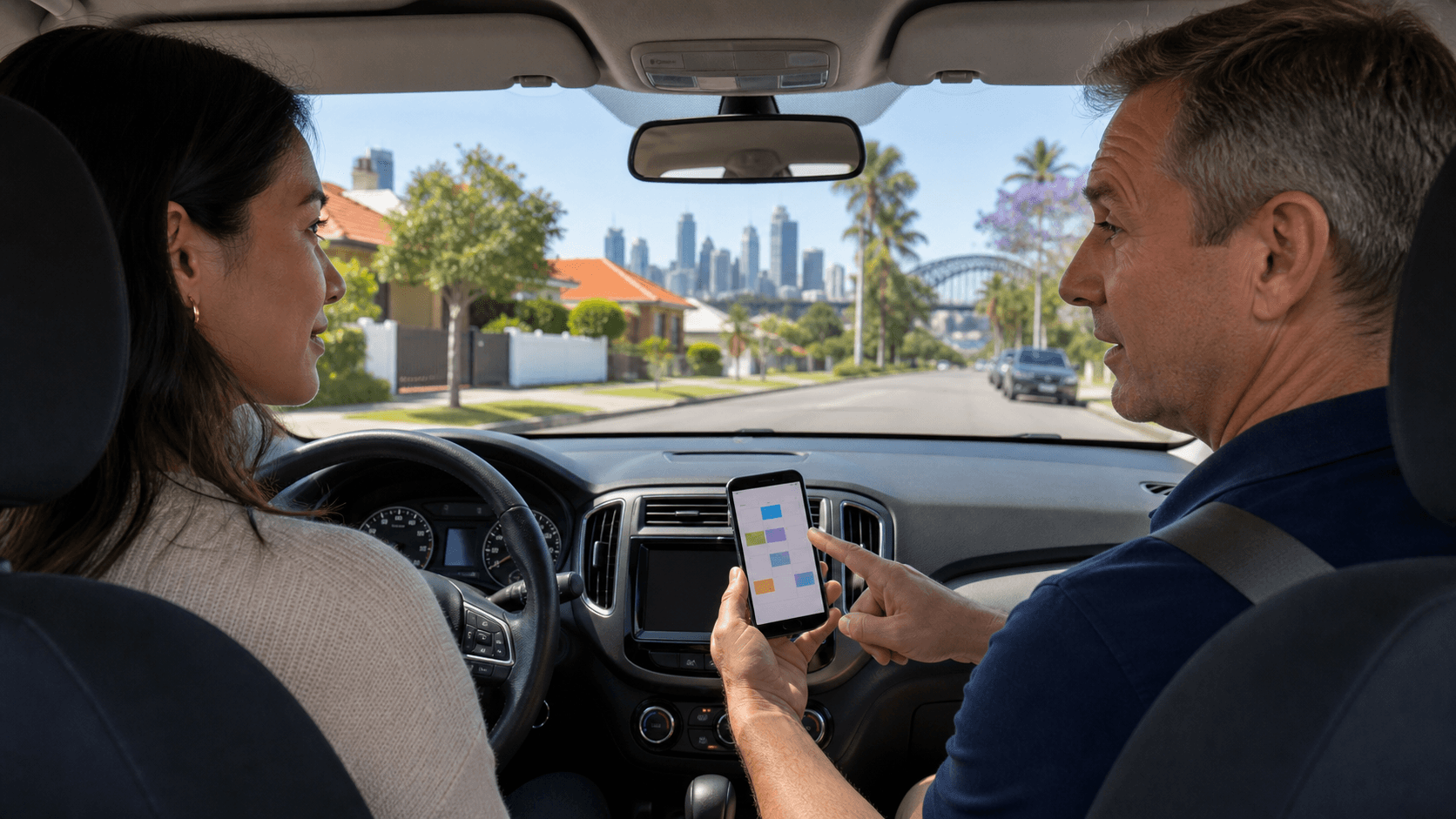
Learning to drive in Sydney's inner suburbs can feel intense, especially for your first driving lesson in Sydney. Streets in places like Newtown, Surry Hills, Glebe, Pyrmont and Darlinghurst are tighter, busier and full of fast decisions. There are one-way streets, tram lines, bicycle lanes, and plenty of people walking, riding and stepping off buses. It can feel like everything is happening at once.
That is exactly why training in these areas is so valuable. If you can stay calm and in control here, quieter suburban streets and regional roads will feel much easier later. As a multi-award-winning driving school, we focus on building real confidence in these trickier conditions, not just teaching you how to steer and change gears.
In spring, longer daylight hours and milder weather mean more people are outside, more after-school activity and extra traffic around popular café strips. Lesson planning needs to allow for this, so your first few drives are challenging but still safe and structured. In this guide, we walk through simple, practical strategies for handling one-way streets, tram lines and peak-hour traffic in Sydney's inner suburbs, with tips for both learners and supervising drivers.
Mastering One Way Streets in Inner Sydney
Your first driving lesson in Sydney's inner suburbs will likely include one-way streets. They are common around the edge of the CBD and in places like Newtown backstreets, parts of Redfern, Ultimo and Chippendale. These streets are often narrow, lined with parked cars and full of people crossing between shops and cafés.
Key things to watch for with one-way systems are:
- One-way signs with arrows at intersections
- No entry signs facing you when you must not enter a street
- White arrows painted on lanes showing allowed directions
- Turn arrows on traffic lights that match the road markings
Get into the habit of looking for these before you turn, not after. Scan from the top of the intersection down, starting with traffic lights and signs, then checking lane arrows and any painted words like ONLY or LEFT.
If you realise you are in the wrong lane or heading for a no entry sign, your first job is to stay calm. Do not brake suddenly or swerve. Instead:
- Ease off the accelerator early and cover the brake
- Check your mirrors and blind spots
- Indicate in plenty of time
- Choose a safe, legal turn or continue to the next intersection to correct yourself
For night or wet weather lessons, some lane arrows and paint can be harder to see. In those cases, we suggest you:
- Rely more on signs and signals than road paint
- Use low beam headlights and keep your windscreen clear
- Reduce speed slightly so you have more time to read the road
We plan inner suburb routes so your exposure to one-way networks grows step by step. Early lessons might use wider one-way streets with clear markings, then move towards tighter back streets and trickier grids once your observation and decision making improve.
Sharing the Road Safely with Sydney's Tram Lines
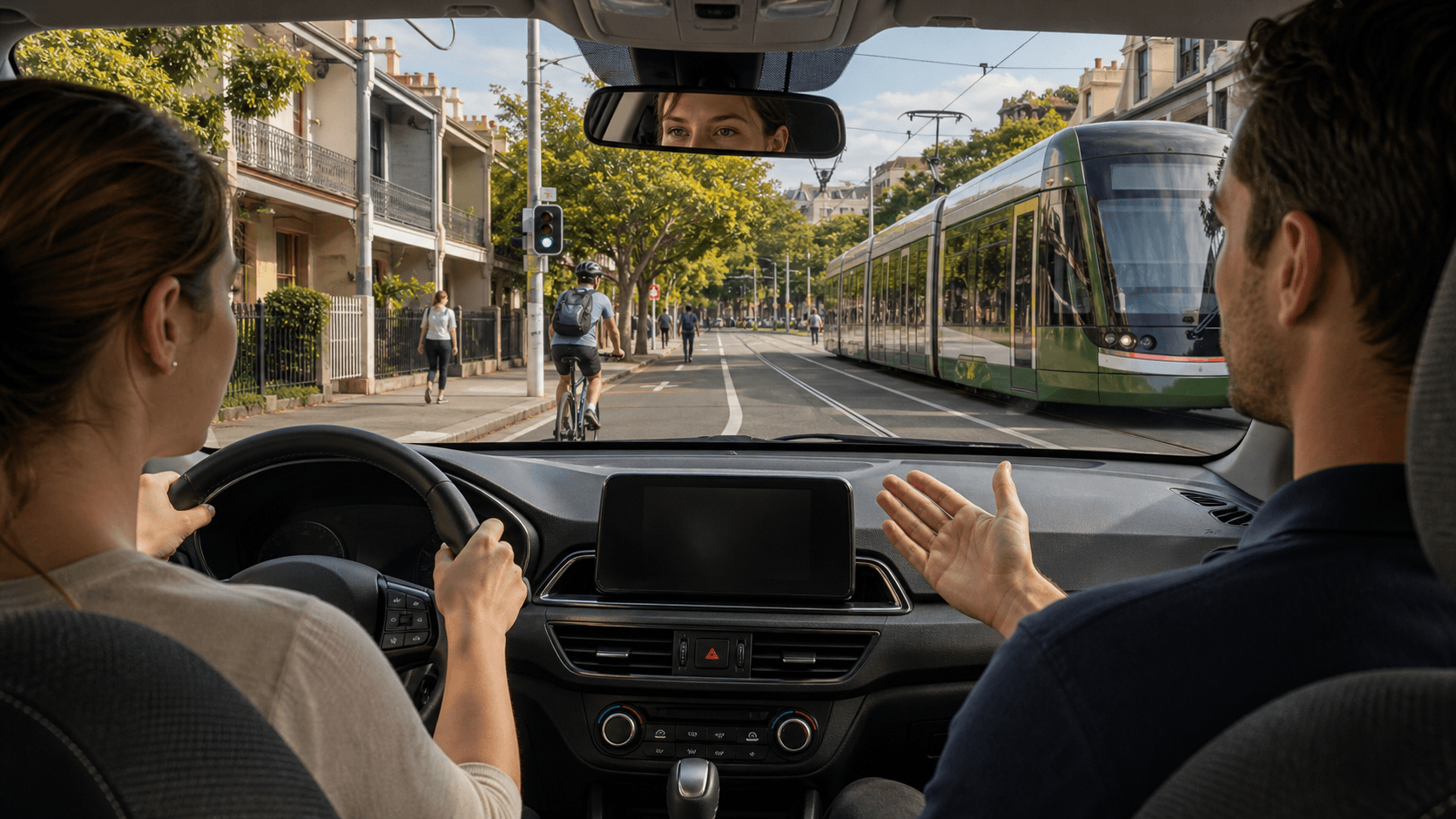
Inner Sydney now has several light rail corridors that many learners will drive near often, especially between the inner west and Central, along the CBD and South East Light Rail, and routes heading towards areas like Haberfield and Leichhardt. Driving near trams is not hard once you understand the markings and signals.
Watch out for:
- T-lights, special signals that apply only to trams
- Tram only lanes or sections marked with solid lines or signs
- Shared car and tram lanes with rails in the road surface
- Designated pedestrian crossing points around tram stops
When you are driving next to or across tram tracks:
- Keep your steering smooth and avoid sudden lane changes over rails
- Do not stop on the tracks, even in heavy traffic
- Cross rails at a gentle angle rather than sharply where possible
- Slow slightly in wet conditions, as metal rails can be slippery
Tram stops and platforms are busy zones. Pedestrians often cross at the last second, and cyclists can appear from both directions. Around these areas, it helps to:
- Cover the brake and increase your following distance
- Scan wide, not just straight ahead
- Expect people to cross from between tram carriages or around the back
Our instructors spend time explaining tram signals, road markings and typical tram movements while you are on the move, not only while parked. This coaching helps you read the whole scene early so you are not surprised by a tram starting, stopping or turning, even when the pattern feels unfamiliar at first.
Staying Calm in Peak Hour Inner Suburb Traffic
Peak hour in suburbs like Newtown, Erskineville, Surry Hills and Glebe can feel intense, especially if it is your first driving lesson in Sydney. You might be sharing the road with buses, delivery vans, ride-share cars and long lines of stop-start traffic. School zones and pedestrian crossings add more decision points.
To handle this safely, we focus on three main skills:
- Smooth stop-start driving, gentle on the accelerator and brake
- Keeping a safe following distance, even when others close the gap
- Looking well ahead, not just at the car right in front
Try to read traffic lights several vehicles ahead. If you see a light that has been green for a while, be ready for it to change. This helps you slow down early instead of braking hard at the last moment.
Lane management is also important. Inner suburb corridors can include:
- Bus lanes that operate only in set hours
- Clearways that remove parking during peaks
- Turning lanes that end quickly after intersections
We teach learners to choose the safest lane, not the one that looks fastest. Often the safest lane is the one with fewer parked cars, fewer merging points and clearer visibility, even if it appears a little slower.
On spring afternoons, sun glare on your windscreen can be a real problem. Simple steps help:
- Keep your windscreen clean inside and out
- Use sun visors and sunglasses if needed
- Leave extra space so you can still see brake lights ahead
Peak hour can also raise your stress. During lessons, we use simple stress management tools like:
- Slow, steady breathing while stopped at red lights
- A quick mental reset, focusing on the next one or two decisions only
- Short checklists, such as mirrors, signal, position, speed, to keep your mind on the task
Planning Your First Driving Lesson in Sydney's Inner Suburbs
Good planning makes your first driving lesson in Sydney much more comfortable. For new learners in inner areas, it often helps to start:
- Late morning on weekdays, after school drop off and before lunch rush
- Early afternoon on weekends, before evening traffic builds
- On dry days with good light where possible
Once your basic control and observation improve, we slowly introduce busier times so you gain safe peak-hour experience with an instructor beside you.
Parents and supervising drivers can also play a big role between professional lessons. Start with:
- Quiet nearby streets with low speed limits
- Simple intersections with clear signs
- Short drives, then slowly build up the time
Over time, you can add one-way streets and slightly busier roads so your practice matches what you are doing in lessons. Before each professional lesson, it helps to tell your instructor:
- Which suburbs you travel through most often
- Any worries you have about trams, one-way streets or peak hour
- Whether you are learning in an automatic or manual car
We then tailor routes, starting points and lesson length to suit your current skills and the specific challenges in your local suburbs. That way, every session feels achievable but still moves you forward.
Turn Challenging Inner Streets Into Your Driving Strength
Tightly packed inner Sydney streets, with their one-way systems, tram lines and heavy traffic, might seem like the worst places to start. In reality, learning to stay calm and in control here early on can turn into one of your biggest strengths. Once you can manage these conditions, driving in other parts of Sydney and regional NSW often feels more relaxed.
The key is not to avoid complex inner suburbs, but to face them with patient guidance, clear explanations and lots of supported practice. Choose the main suburb you want to get comfortable in, think about the time of day that feels right, and be open with your instructor about your goals and worries. With steady, suburb-specific training and regular practice, those same streets that looked scary at first can quickly become the places where you feel most proud of your progress.
Book Your Confidence-Boosting Lesson Behind The Wheel Today
If you are ready to feel calm and in control on the road, lock in your first driving lesson in Sydney with Prestige Driving School now. We will tailor your session to your experience level so you can build safe driving habits from day one. If you have any questions or want help choosing the right package, simply contact us and we will guide you through the next steps.